
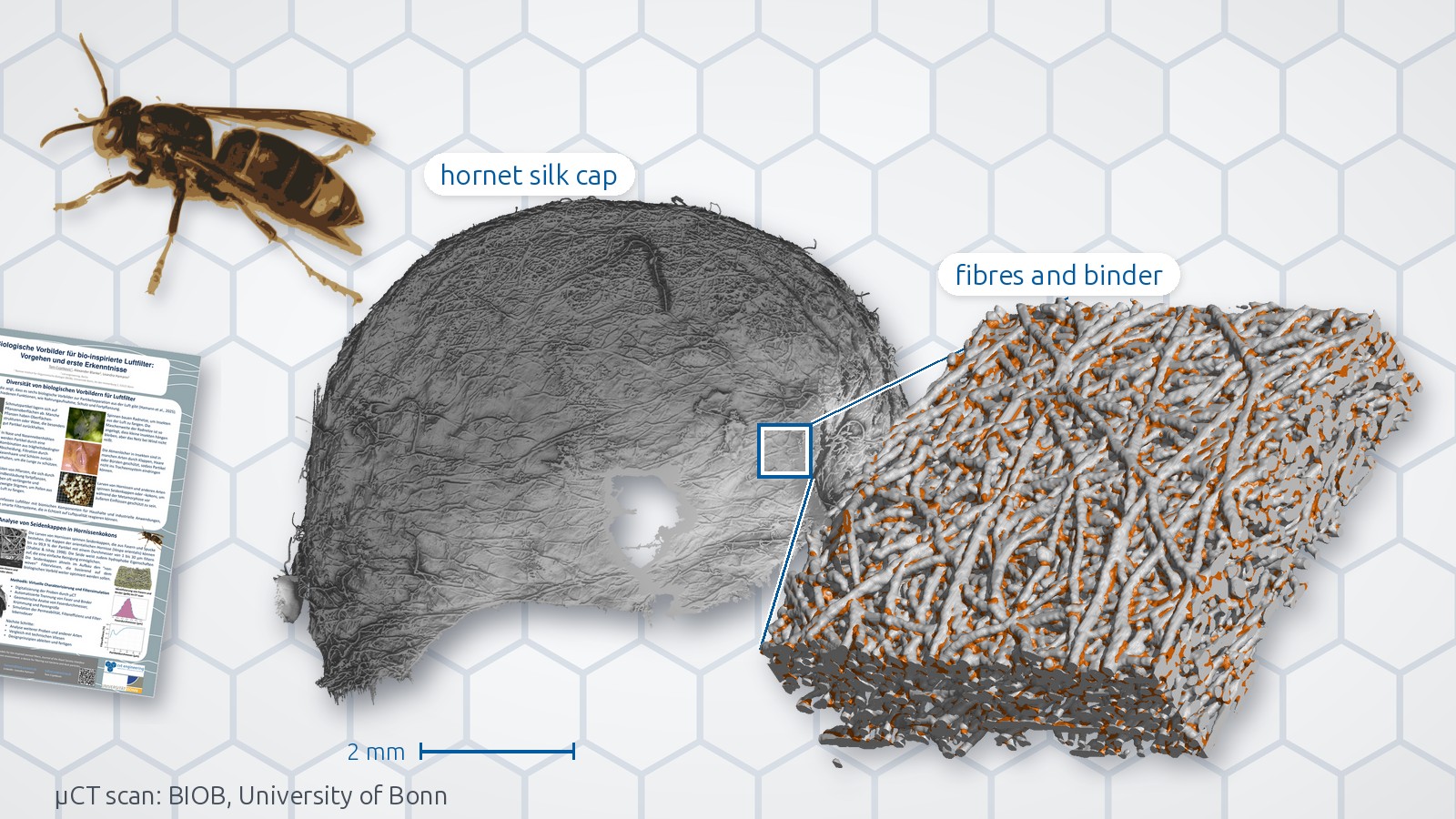
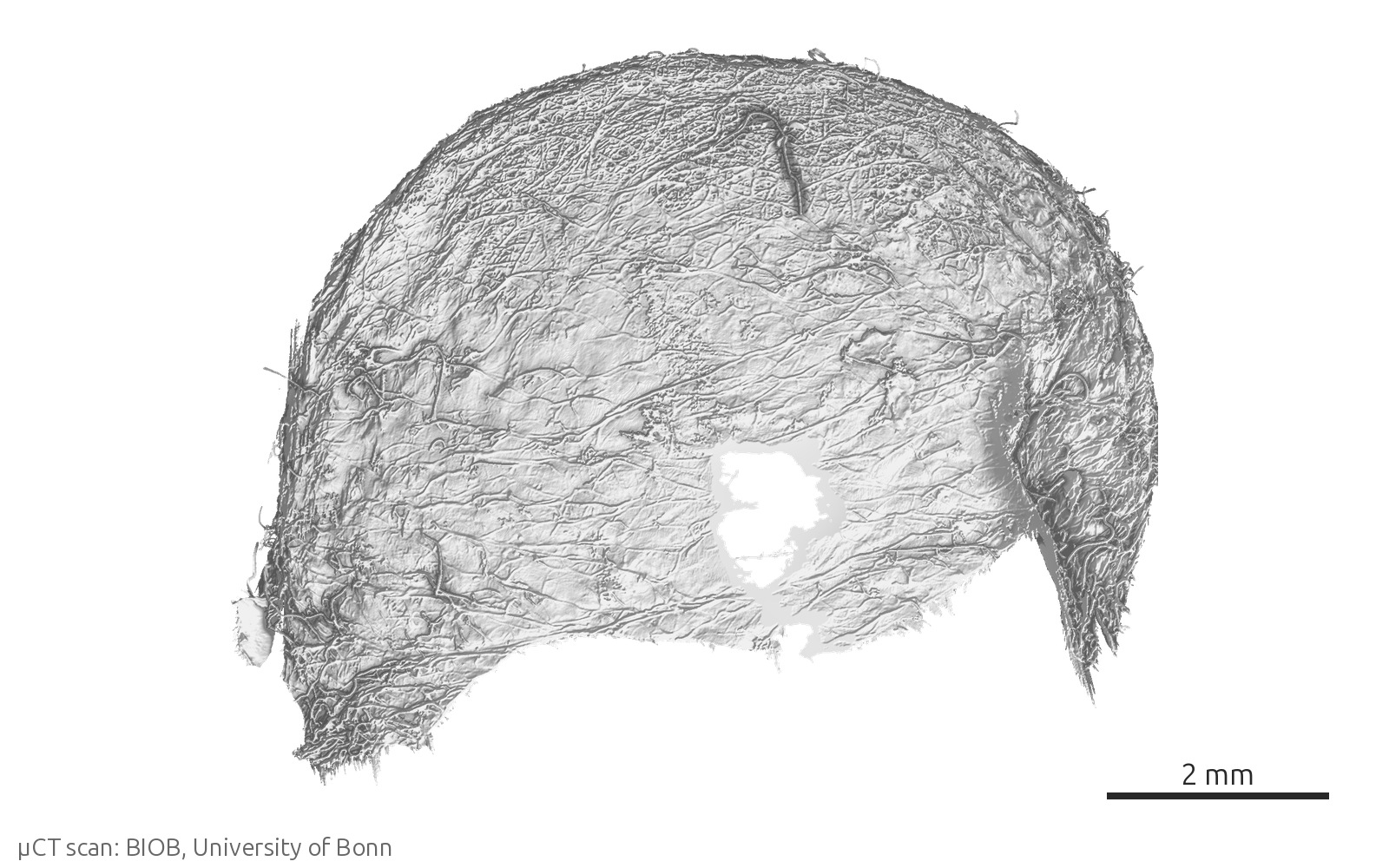
Hornet larvae close their cells with caps of silk. The caps are reported to let air through and hold back dust, and in their build they resemble a technical nonwoven, with fibres held together by a binder. Together with Leandra Hamann and Alexander Blanke of the Bonn Institute of Organismic Biology at the University of Bonn, cvt engineering looks at these caps as a model for air filters.
Fibres and binder
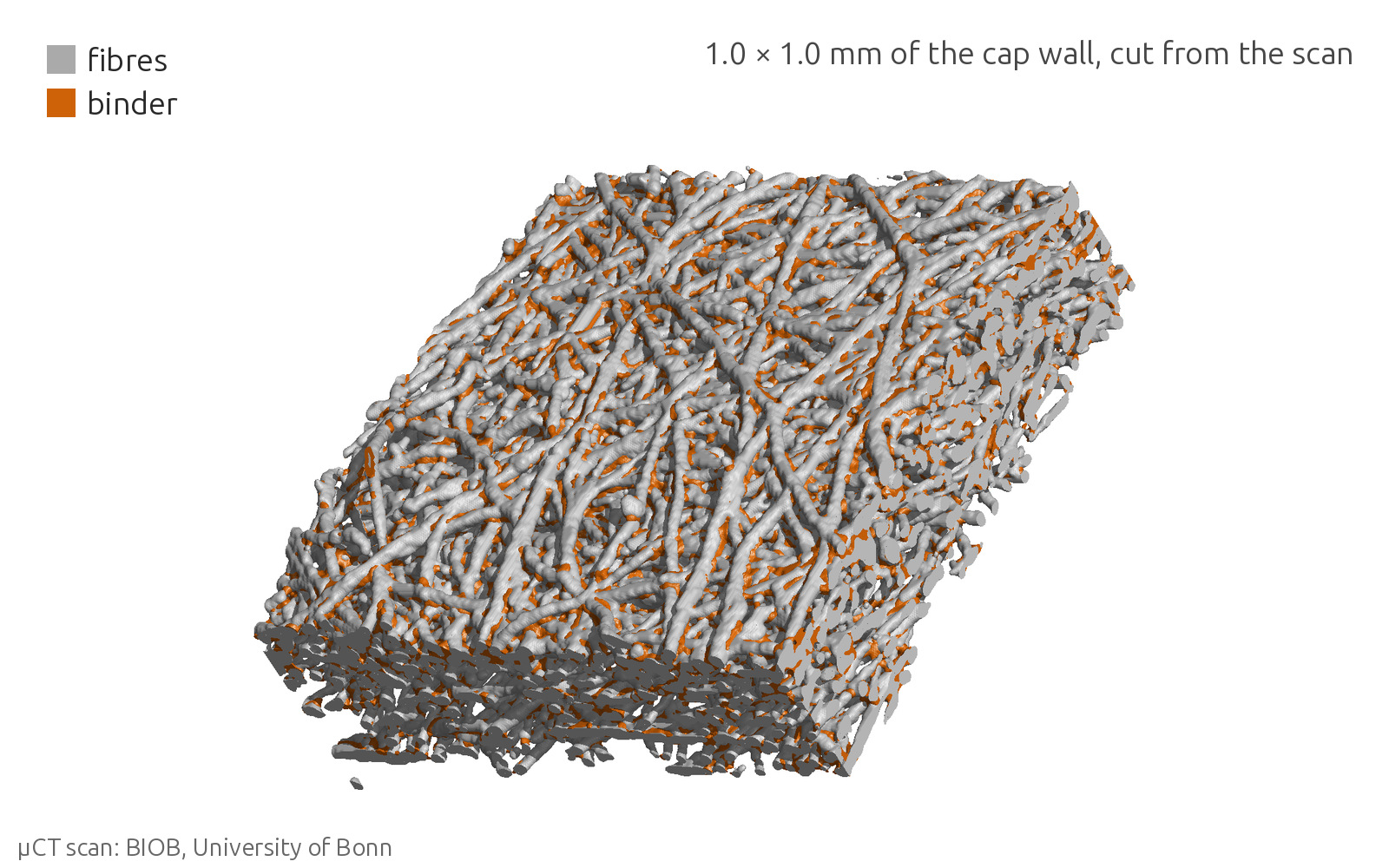
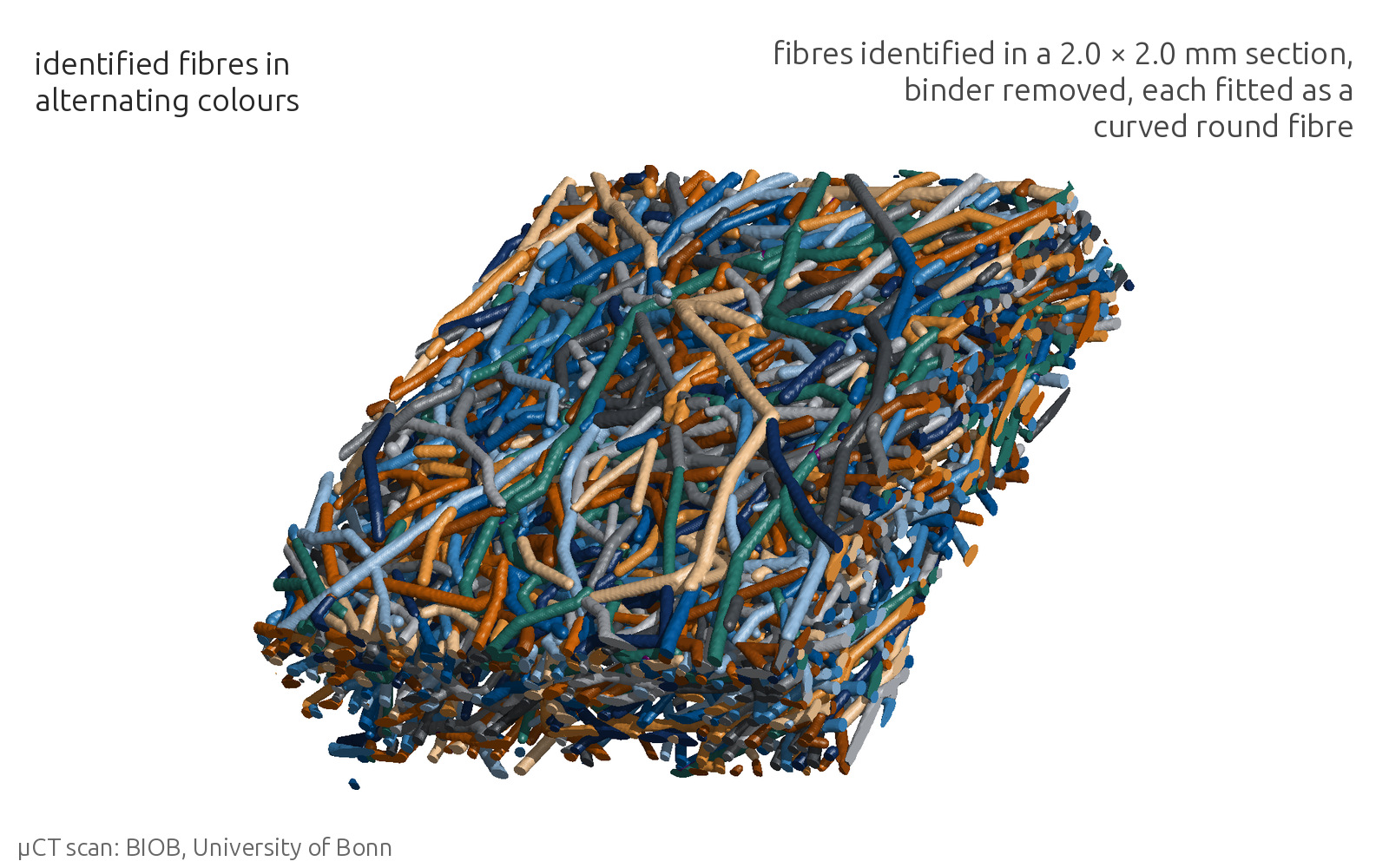
The cap was scanned in a µCT. In the scan the silk fibres and the binder between them are told apart, and the fibres are identified individually. From this follow the diameter and curvature of the fibres and the position of the binder.
Flow and filtration
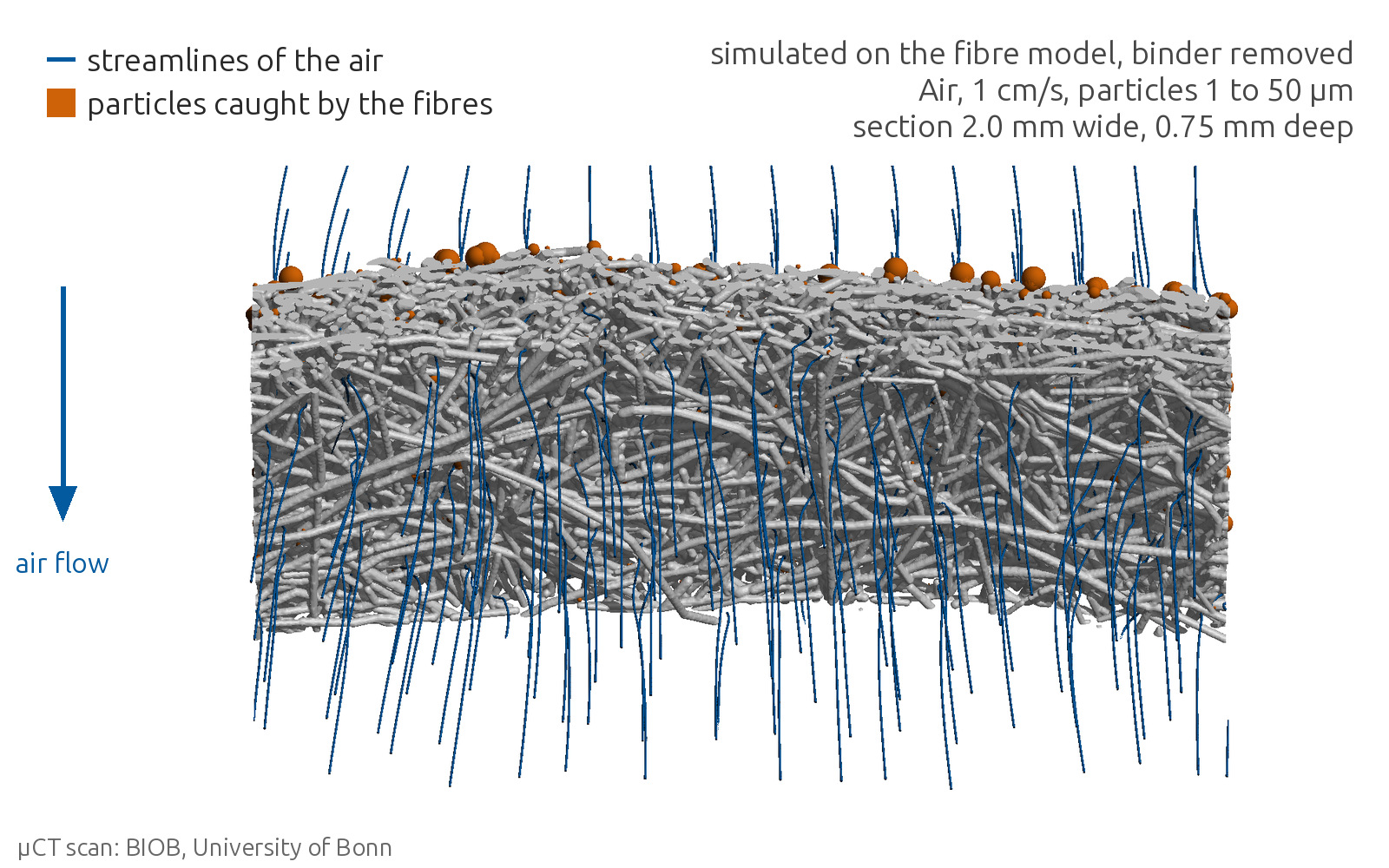
On the digital structure, air flow and the path of single dust particles can be simulated. The picture shows the streamlines of the air through the fibre model of a section of the cap, and the particles the fibres have caught.
Poster and case study
First results were shown as a poster at the Bremen Bionics Congress in October 2025. A case study with the numbers is in preparation, written with Savannah Stotts.
Bio-inspired filters
We are looking for partners from research and industry who develop or optimise filters and want to work on this with us.